

10 Apr Travel’s Next 20 Will Not Be Built by Technology Alone
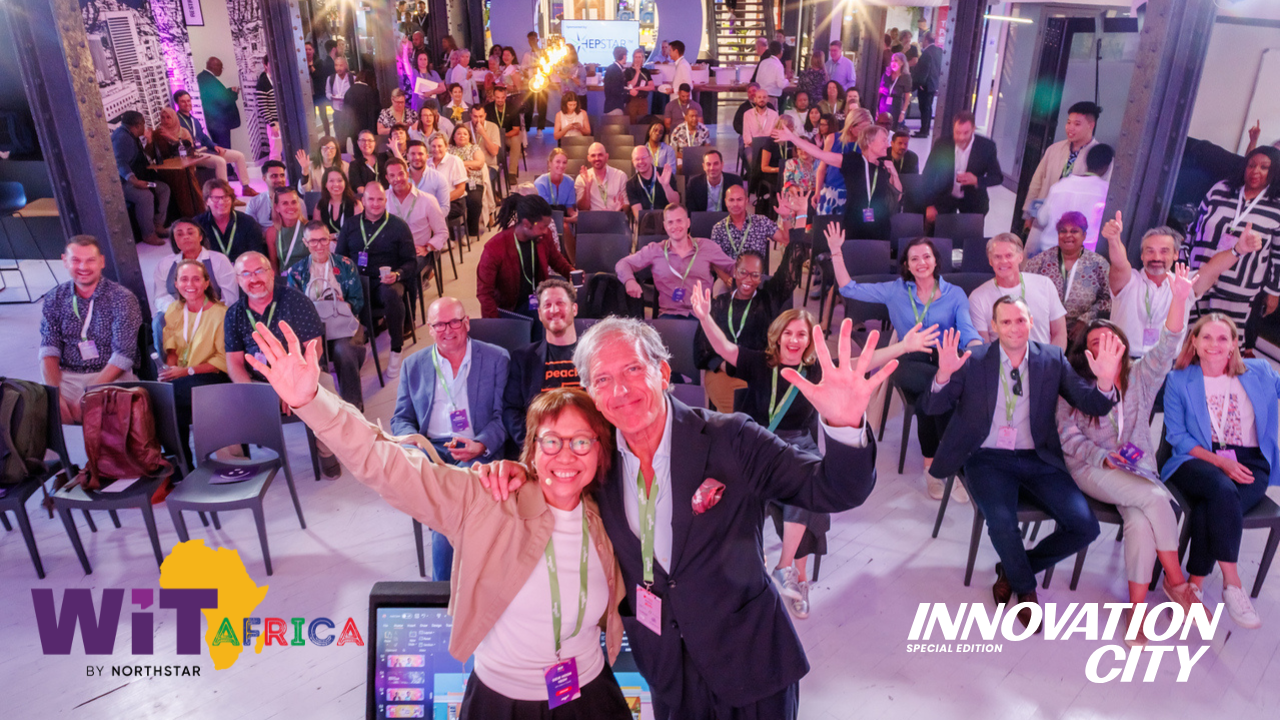
At WiT (Web in Travel) Africa 2026, one thing was very clear: the next era of travel will not be shaped by technology in isolation. It will be shaped by the tension between technology, trust, infrastructure, and local complexity.
Setting the tone for the day, stephan ekbergh, founder of Travelstart and co-founder of Innovation City, opened with a line that set the tone for the entire day: Travel runs on two things, he said: technology and relationships. One moves us forward. The other keeps us together.
It sounded simple. But it held.
The future is accelerating, but not evenly
In 10 Big Bets on the Future, moderated by WiT founder Siew Hoon Yeoh, the conversation moved quickly from scale to behaviour.
Bayo Adedeji put a clear stake in the ground, noting that online travel in Africa is already at 40 percent, higher than it has ever been. Tania Platt pushed that further, arguing that it is not simply about growth but about how people will use these channels differently. Mike McGearty extended that trajectory, suggesting that penetration could move beyond 80 percent by 2045, driven by mobile and AI.
There was also a clear generational divide. Younger travellers are adopting AI much faster, while older travellers, who still hold the majority of spending power, are slower to shift. That imbalance is likely to shape how quickly behaviour actually changes.
What was more striking, though, was how often the conversation returned to trust. Adedeji pointed out that Africa will use AI differently because trust plays a more central role in decision-making here. McGearty reinforced that trust remains the foundation of travel, and Yeoh translated that into something commercial by noting that if trust is the currency, brand still matters.
There was no agreement on who ultimately wins. McGearty pointed to suppliers going direct if they can take control of their strategy. Platt suggested that the strongest position may sit with infrastructure providers. Adedeji argued that the aggregator wins because customers want simplicity. The lack of consensus made it clear that the model is still evolving rather than settled.
Building in Africa forces depth, not scale-by-default
That uncertainty carried into the next session, but in a far more grounded way.
In conversation with Yeoh, Craig Hewett focused less on theory and more on what it takes to operate. After a 40 percent decline linked to Middle East conflict, Wego.com pivoted toward local travel and North Africa, drawing on the same playbook it developed during Covid. The response was not about reacting quickly for the sake of it, but about knowing how to reconfigure the business under pressure.
When asked whether African founders are more resilient, his answer was not romantic. The market demands it. Payments are fragmented, regulation is inconsistent, and visa systems introduce additional friction. Nothing is standardised, which means operators have to be more resourceful and more precise in how they build.
He also made an important point that sat slightly beneath the surface of the rest of the programme. Much of the next phase of growth is likely to come from B2B rather than purely consumer-facing products. The less visible layers of the ecosystem are where a significant amount of value is still being created.
OTAs are being reshaped, not replaced
That distinction between visible and invisible layers continued into the OTA discussion.
On stage, Alberto Yates, Craig Hewett, and stephan ekbergh explored how the role of OTAs is changing.
Ekbergh raised a more structural question by suggesting that the future may be browserless. People are already interacting through interfaces that are less tangible, but the underlying systems still have to function. Whether those systems are still called OTAs is almost beside the point.
Hewett brought the focus back to execution, emphasising that customer service remains central. Yates added that forecasting has become significantly more complex as global conditions shift. Travel demand remains resilient, but it is moving across different corridors and becoming less predictable.
The African context made that even more nuanced. Hewett highlighted the pressure created by high payment fees in a low-margin environment. Ekbergh pointed to regulatory complexity and the difficulty of investing across such a diverse region. Yates, by contrast, noted that South Africa is currently performing well, with strong domestic travel and increasing inbound demand.
The takeaway was not that one model will dominate, but that each market requires a different level of localisation and adaptability.
Loyalty is becoming embedded in everyday behaviour
The conversation with Michelle K. Munemo shifted the focus to customers in a more immediate sense.
Her framing of the South African market was direct. While macro indicators may suggest improvement, many households remain under pressure. That changes how products need to be designed.
She described a private banking client who may not have the same liquidity as global peers but still expects a similar lifestyle. In that context, rewards are no longer a secondary feature. They are a key way of retaining and engaging customers in a highly competitive environment.
At the same time, customers are increasingly strategic in how they engage with financial products, often using multiple accounts to maximise benefits. Loyalty is therefore not guaranteed. It has to be earned continuously.
What stood out was that Standard Bank’s travel platform is being used even when customers do not qualify for discounts. The driver is not price alone, but a combination of trust, safety, and convenience.
Travel is shifting toward experience, not just destination
By the time the programme moved into hospitality and the experience economy, the shift in behaviour was clear.
On the hospitality panel, Geri Flanagan, Olivier Perillat-Piratoine, Theresa Emerick , and Kei Shibata all pointed in the same direction.
Emerick described hospitality as needing to become a portal into a region rather than a standalone product. Shibata noted that accommodation is no longer the starting point for discovery, with interest increasingly driven by narrative and context. Flanagan highlighted the opportunity in secondary destinations and community-driven experiences, while also pointing out that building physical hospitality infrastructure in Africa can take years.
Digital discovery may be accelerating, but the underlying product remains slow to develop, which creates a different kind of pressure on operators.
Demand is strong, but infrastructure is the constraint
The live events session brought that tension into sharp focus. Justin Van Wyk and Tracy Thandeka Mkhize (eMBA) made it clear that demand for events in South Africa is not the issue. Large-scale events continue to drive significant economic impact, and global interest remains strong.
The constraint is infrastructure. Venue capacity, transport systems, and coordination all limit how much of that demand can be converted into consistent growth. There is also a growing concern around pricing, with Cape Town increasingly being compared to more expensive global destinations.
These are not peripheral issues. They directly affect the country’s competitiveness as a destination.
Experience still requires human validation
In the experience economy discussion, Zinzi Bobani, Iain Manley, Marina Cangelaris, and Leyla El Guermaï explored what makes an experience valuable.
One detail stood out. People were more comfortable moving from search to booking when there was some form of human validation behind what they were seeing, even if the initial discovery came through AI.
That balance between automation and assurance appeared repeatedly throughout the day.
Discovery has fragmented
The next panel asked a question that has been circling for a while: who actually controls discovery now?
The answer is still unclear. Discovery has fragmented. If you know what you want, you go to AI. If you don’t, you look to creators. And algorithms are still there, shaping what gets seen in the background.
So the question isn’t who controls discovery anymore. It’s where your customer starts, and whether you show up there at all.
Kelvin Jonck pointed out that even AI leans on human-led platforms like Reddit to validate what it shows, pulling from real opinions and lived experience.
Reece Meyer added that while travel content is everywhere, the real distinction is that creators build their own communities, while influencers rely on borrowed reach, and that difference shows up in trust.
Hannah Ekberg brought it back to what actually happens at the end of that journey -conversion. Today anyone can ship a shell app in minutes – but flights are emotional, and a shell cracks when travel plans get disrupted. Influence can’t be faked or bought anymore; LLMs reward what’s genuinely authoritative. Fix your service and expose clean, accurate pricing first – or forget the high-intent traffic.
Founders are building under constraint, not hype
Ben Peterson provided a clear view of the funding landscape. While billions have flowed into African startups overall, tourism tech has received only a small share of that capital.
His advice reflected that reality. Founders need to position themselves as technology businesses, focus on growth, and align with where investor interest currently sits.
The founder panel that followed, featuring Aaron Fuchs, Alon Stern, and Prasanna Veeraswamy, reinforced a more pragmatic perspective. Profitability, defensibility, and execution matter more than ideas alone. AI can accelerate building, but it does not remove the need to create something that is difficult to replicate.
Payments and aviation define what actually scales
The payments panel, with Daniel Hawkins, Carel van Wyk, Paulina Klotzbücher, and others, highlighted how much friction still exists in the system.
BNPL is expanding access to travel for people without traditional credit. Crypto is beginning to create alternative pathways for payment. At the same time, settlement complexity and cross-border inefficiencies continue to slow things down.
These are not secondary issues. They directly influence conversion and growth.
That theme carried into the aviation discussions. Tebogo Tsimane spoke candidly about rising costs, shifting demand patterns, and the constraints created by legacy systems. He also highlighted the need for greater connectivity across Africa if the continent is to realise its full travel potential.
What actually holds
By the end of the day, Stephan Ekbergh returned to a different idea. When the cost of creating drops, he said, creativity goes ballistic.
But what stood out across the programme wasn’t just what can now be created. It was how consistently the conversation returned to the same underlying realities. Trust still determines whether a traveller actually books. Local understanding still shapes whether a product works in-market. Infrastructure still dictates what can scale. And execution, not ideas, is what ultimately holds up under pressure.
AI is reshaping travel. That much is clear. But it is not replacing the fundamentals. If anything, it is making them more visible, and more difficult to get right.
Access the full WiT Africa 2026 Photo Gallery here.
See you at WiT Africa 2027: The New Beginning!
Special Tributes
We would like to share a special thank you to Siew Hoon Yeoh for her vision in creating such an incredible and inspirational event. Our gratitude also goes to stephan ekbergh for his generosity in creating the space to host us at Innovation City. Having such a forward-thinking backdrop for our discussions made all the difference.
Our Sponsors
This event would not have been possible without the generous support of our partners. We would like to extend our deepest gratitude to: Peach Payments; Amadeus; Glyde Payments; Hepstar; RwandAir Ltd; Cape Town Tourism; Travelstart; Club Travel; Booking.com and Wego.com